From VVF to VCF: A Phased Rollout for One Private Cloud Service
TL;DR
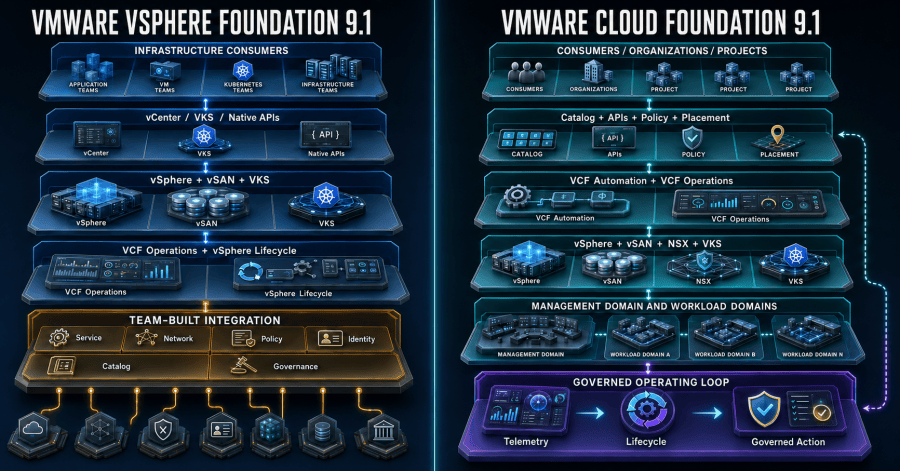
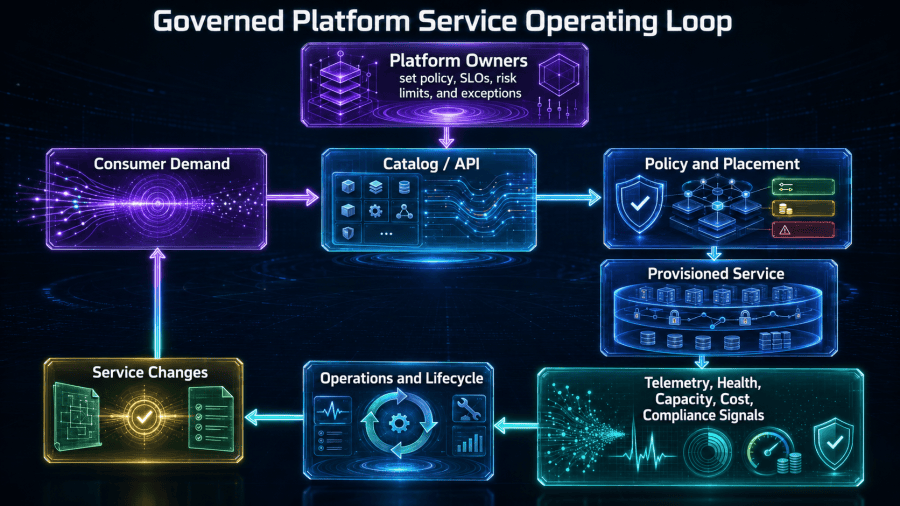
A VVF-to-VCF program should earn expansion through one complete service. Establish the current estate, define what consumers will request, select the applicable deployment or convergence path, and pilot delivery with its network, security, lifecycle, and recovery controls. Introduce self-service only after the team can verify outcomes and handle partial failure. This article provides a phased rollout model with evidence to continue, narrow, or pause at each stage. It does not substitute for the supported upgrade procedure for your actual component builds.
Start with one service and one reason to change
Select the deployment, upgrade, import, or convergence route using the actual starting configuration. Broadcom’s VCF 9.1 upgrade guidance emphasizes prerequisites, environmental validation, and component-dependent planning. Translate that guidance into a plan specific to the environment. Preserve backup, recovery, maintenance-capacity, and application-validation work alongside the software sequence.
Scope the adoption decision
Specify the permitted request, its inputs and defaults, who can use it, the applicable approval policy, and the result the consumer should receive. Include network access, identity, storage policy, monitoring, lifecycle actions, and retirement. The service is complete when the intended application environment works within its approved boundaries.
Retest both the failure and the recovery. Inspect access after the workflow resumes, verify that retries did not create duplicate resources, and confirm that audit and ownership records describe the final state. This is an illustrative acceptance scenario, not a reported test run or a claim of automatic remediation.
Continue reading
Phase 2: define the service consumers will receive
Phase 1: establish the current estate
Add one meaningful dimension at a time, such as another consumer group, service class, or location. Reassess the affected identity, capacity, tenancy, network, lifecycle, and support requirements. Standardize a proven service before replicating it; copying an unresolved exception multiplies the support problem.
The evidence thresholds should follow the workload’s consequences and service objectives. This table deliberately does not prescribe a universal trial count, cost target, or automation percentage. Use the smallest scope that can test the intended operating model with representative dependencies.
Phase 4: pilot the complete request
Run the service with a small, named consumer group. Exercise ordinary creation, change, and retirement, then introduce failures at the external dependencies and platform handoffs. Do not expand the catalog while operators still rely on undocumented recovery or unrestricted service credentials.